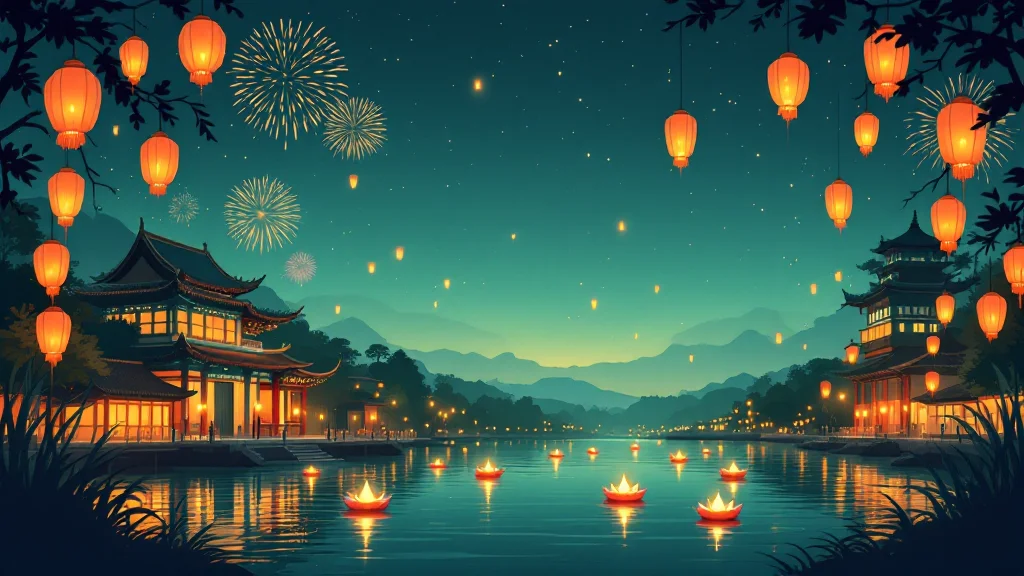
Every November, rivers, canals, and ponds across Thailand fill with candlelit baskets on the same nights the country calls Loy Krathong, the nationwide tradition behind the lantern-filled skies you’ve probably seen in photos from Chiang Mai. This guide is the nationwide overview: what Loy Krathong actually is, the verified 2026 dates, where to go depending on what you want (the festival’s original home in Sukhothai, the lantern spectacle in Chiang Mai, the riverside show in Bangkok), how a krathong is actually made, and the honest rules around sky lanterns and fireworks that most travel brochures skip. If Chiang Mai’s Yi Peng lantern release is specifically your destination, our Yi Peng and Loy Krathong in Chiang Mai guide goes much deeper on tickets, free viewing spots, and flight disruptions than we can here.
Every date, price, and safety detail below is sourced from Tourism Authority of Thailand (TAT) coverage, Thai news reporting, and official festival and ticketing pages, all listed in the Sources section. Prices are in Thai baht (THB) with US dollars in parentheses, converted at ฿33 = US$1 (July 2026).
When is Loy Krathong in 2026?
Loy Krathong 2026 falls on November 24-25, timed to the full moon of the 12th month in the Thai lunar calendar. Most official festival programs, including Sukhothai’s Light & Sound show schedule and Chiang Mai’s ticketed lantern events, treat November 24 as the main night, with celebrations continuing into the 25th. Because the date follows the lunar calendar rather than a fixed day on the Western calendar, it moves every year, Loy Krathong fell on November 5 in 2025 and is scheduled for November 13 in 2027.
Unlike Songkran, Loy Krathong is not a national public holiday. Government offices, banks, and most businesses stay open through the day; the celebration happens in the evening, at temples, riverbanks, and festival grounds, rather than during a day off. Check our Thailand public holidays guide if you’re trying to work out which days on your trip actually come with closures. See our Songkran nationwide guide for how Thailand’s other major festival compares, if you’re weighing the two for a trip.
Where’s the best place to celebrate Loy Krathong in Thailand?
Each major city puts its own spin on the festival, and picking the right one depends on whether you want history, spectacle, or convenience.
| Location | What’s special | Best for |
|---|---|---|
| Sukhothai Historical Park | The festival’s traditional home. The Sukhothai Loy Krathong and Candle Festival runs November 15-24, 2026, inside the UNESCO-listed historical park, with a nightly Light & Sound show (฿500-1,200, about US$15-36) retelling the Sukhothai Kingdom’s history among the actual ruins, plus an extra show on the 24th | Travelers who want the origin story and a genuine historical setting |
| Chiang Mai (paired with Yi Peng) | Free krathong floating along the Ping River and Old City moat, plus the paired sky-lantern release; the postcard mass-lantern photos come from ticketed events (roughly ฿4,800-15,900, about US$145-480) held outside city limits | The famous sky-lantern shot, see our full Chiang Mai Yi Peng guide |
| Bangkok (Asiatique & Wat Arun) | Asiatique the Riverfront’s boardwalk has hosted the capital’s main celebration since 2013, an illuminated float procession, fireworks, and a krathong launch site on the Chao Phraya; Wat Arun draws a quieter crowd releasing krathongs against the lit-up temple | Visitors who don’t want to leave Bangkok for the festival |
| Ayutthaya | Wat Phra Ram’s lotus pond, inside the also-UNESCO-listed Ayutthaya Historical Park, puts krathongs against centuries-old temple ruins; exact festival-week programming is confirmed closer to each year’s date | An ancient-ruins backdrop within easy reach of Bangkok |
Compiled from TAT coverage and official festival and ticketing pages for the 2026 festival; exact daily programming in Bangkok and Ayutthaya is typically confirmed closer to the date. See Sources.
What’s the difference between Loy Krathong and Yi Peng?
They’re often described as one event, but they’re two related traditions that happen to overlap. Loy Krathong is the nationwide custom of floating a decorated basket, the krathong, on a river, canal, or pond, done everywhere in Thailand, not just Chiang Mai. Yi Peng is a separate northern Thai (Lanna) tradition of releasing paper sky lanterns called khom loi, centered on Chiang Mai and the surrounding region.
In Chiang Mai the two happen on the same nights, so visitors usually experience them as a single event, krathongs on the water and lanterns in the sky, together. Elsewhere in Thailand, including Sukhothai, Bangkok, and Ayutthaya, it’s Loy Krathong alone; there’s no paired sky-lantern tradition outside the north. If you’re picturing thousands of glowing lanterns rising together, that’s specifically Yi Peng, and specifically the choreographed releases at ticketed venues outside Chiang Mai.
What does Loy Krathong actually mean?
At its core, Loy Krathong is an act of gratitude and release. Floating a krathong is a way of paying respect to Phra Mae Khongkha, the Thai goddess of water, thanking her for the water used throughout the year and apologizing for polluting it, while symbolically letting go of anger, grudges, and bad luck from the past year. A TAT Newsroom description of the tradition puts it plainly: “Participants float beautifully decorated krathongs adorned with candles and flowers, a gesture believed to release misfortune and invite good fortune and positivity.”
The festival also lands during one of Thailand’s most pleasant weather windows, the start of the cool season, when the rains have cleared and the air turns noticeably fresher than the humid months before it. See our best time to visit Thailand guide for how late November fits the wider seasonal picture nationwide.
How do you make (and float) a krathong?
A traditional krathong is built from a cross-section slice of banana tree trunk, folded banana leaves arranged around the edge, and topped with flowers, a candle, incense, and sometimes a coin. It’s lit and set adrift on moving water, a river, canal, or pond, as an offering.
Materials matter more than most visitors realize. A banana-leaf-and-trunk krathong is fully biodegradable and the traditional, lowest-impact choice. Bread is genuinely edible fish food in a large flowing river, but in a small, still pond it becomes waterlogged waste once enough people float it at the same time. Styrofoam is the worst offender, it doesn’t biodegrade at all, and Thailand’s Pollution Control Department now actively discourages it. The honest cleanup reality: city authorities, including Bangkok’s, have reported needing months to restore park ponds after festivals where bread and styrofoam krathongs accumulated faster than crews could clear them. If you’re floating one, buy a banana-leaf krathong from a street vendor (typically ฿20-30, about US$0.60-0.90) rather than a styrofoam one, and stick to one per group rather than one per person.
Sukhothai: the festival’s original home
Sukhothai’s claim to Loy Krathong runs deeper than its current festival program. According to a widely told (though historically debated) legend, a royal court lady named Nang Nopphamat crafted the first ornate krathong during the Sukhothai Kingdom, inspired by King Ramkhamhaeng’s own writings; historians note the story likely dates to a later Rattanakosin-era retelling rather than the Sukhothai period itself, but it’s the origin story most Thais grow up with, and it’s why Sukhothai treats the festival as home turf.
The modern festival reflects that: the Sukhothai Loy Krathong and Candle Festival has run inside Sukhothai Historical Park, a UNESCO World Heritage Site, for close to 50 years, and the 2026 edition runs November 15-24, with krathongs floated on the ponds surrounding the park’s ancient temples, folk performances, a beauty pageant, parades, and a nightly Light & Sound show (฿500/900/1,200 for the three ticket tiers, about US$15/27/36) that dramatizes the Sukhothai Kingdom’s history against the lit-up ruins, with an additional performance on the festival’s main night, November 24.
Are sky lantern releases legal?
It’s more restricted than most visitors expect, and not only in Chiang Mai. Thai authorities have repeatedly declared unlicensed sky lantern launches illegal in specific zones around the country during Loy Krathong, alongside bans or tight restrictions on fireworks and firecrackers, citing fire risk, property damage, and, in Chiang Mai’s case, aviation safety. Penalties under Thailand’s fireworks regulations can run up to ฿60,000 and three years in jail for unlicensed fireworks, and up to ฿6,000 and three months for unapproved firecrackers.
Chiang Mai has the most documented restrictions of any city, tied directly to its airport’s flight paths, evening curfews and dozens of adjusted or cancelled flights have been reported around recent festivals, and our Chiang Mai Yi Peng guide covers the no-lantern zones and airport impact in full. The practical takeaway everywhere in Thailand: if you want the mass lantern-release experience, book a licensed, ticketed event that coordinates with local authorities, rather than attempting a launch yourself.
The honest downsides
Crowds and open flames get dangerously close together at the busiest riverside spots, expect a crush of people, candles, and incense at close quarters in Bangkok, Chiang Mai, and Sukhothai alike. Cleanup is a real, recurring problem, not a footnote, cities have had to spend months restoring ponds after bread and styrofoam krathongs piled up. It isn’t a day off, so don’t expect quieter roads or empty offices; the festival competes with a normal working day until evening. Accommodation pressure is real in every festival city discussed here, and exact programming for Bangkok and Ayutthaya in particular is usually only confirmed a few months ahead, so treat specific event details as provisional until closer to November 2026.
Planning the rest of your trip
Late November sits at the start of Thailand’s cool, dry season, one of the best weather windows of the year nationwide; see our best time to visit Thailand guide for the full month-by-month breakdown across regions. Whichever city you choose, book accommodation and any ticketed lantern events as early as your dates allow, tiers for Chiang Mai’s mass releases and rooms near Sukhothai’s park routinely sell out weeks before the festival. If you’re building a wider Thailand itinerary around the cool season, our Songkran nationwide guide covers the country’s other major festival, in April, for comparison.
Sources
- TAT Newsroom: Loi Krathong Festival 2024 - Experience Thailand’s Enchanting Festival of Lights: official TAT description of krathong-floating tradition, event listings
- Bangkok Post via The Pattaya News: Thai Cabinet Approves Proposal to Nominate Loy Krathong Festival for UNESCO Intangible Cultural Heritage List: March 2025 Cabinet approval, nomination title, evaluation timeline
- Nation Thailand: Cabinet approves document for Loy Krathong’s UNESCO listing: nomination process details
- timeanddate.com: Loi Krathong dates: 2025-2027 date listings confirming the lunar-calendar pattern
- TAGTHAi: Sukhothai Loy Krathong and Candle Festival 2026: 2026 Sukhothai festival dates, Light & Sound show pricing and schedule
- Nation Thailand: Thailand Elevates Loi Krathong in Ayutthaya with Grand Memorial Festival: Wat Phra Ram Ayutthaya festival details, UNESCO park setting
- UME Travel: Ultimate Guide about Loy Krathong Bangkok: Asiatique the Riverfront history and event format, Wat Arun viewing details
- Nation Thailand: Launching sky lanterns during Loy Krathong illegal, govt warns: nationwide sky lantern restrictions
- Nation Thailand: Bangkokians urged not to float bread or foam krathongs: environmental impact of bread/styrofoam krathongs, official recommendations
- Bangkok Governor warns of stiff penalty for Loy Krathong fireworks: fireworks and firecracker penalty figures
- Trip.com: Thailand Public Holidays 2026: confirms Loy Krathong is not an official public holiday
- TAT Newsroom: ‘Songkran in Thailand’ declared an UNESCO ‘intangible cultural heritage’: December 2023 Songkran UNESCO inscription, for comparison with Loy Krathong’s pending nomination